
Understanding a glacier cave in Iceland
A glacier cave in Iceland is part of a changing glacier rather than a permanent room in rock. At Vatnajökull, much of the ice begins as snow that becomes compacted, passes through the firn stage and turns into glacier ice. The ice then flows under its own weight. That movement provides an essential starting point for understanding a cave visit: the surrounding material itself is moving.
Breiðamerkurjökull is an outlet glacier of Vatnajökull and a destination for natural cave experiences. Operators seek new caves as the glacier changes each year. A cave name or an older image is therefore a description to interpret, rather than a floor plan for the next trip. Keep your attention on the guided encounter with the glacier, its ice and the safe route available at the time.
This is also why a visit needs a certified glacier guide. Changing access, crevasses, meltwater and the condition of the ice roof matter to the route decision. Understanding the landscape adds to the experience, but it does not make independent entry appropriate. Read the safety and equipment advice before choosing between the different guided outings.
Explore glacier ice
Depending on safety, this guided trip visits an ice cave or a blue ice feature.
Hand-picked tours, booked through GetYourGuide. Prices are indicative starting prices in euros (as of October 2026). Tap a tour for live availability and the current price in your currency.
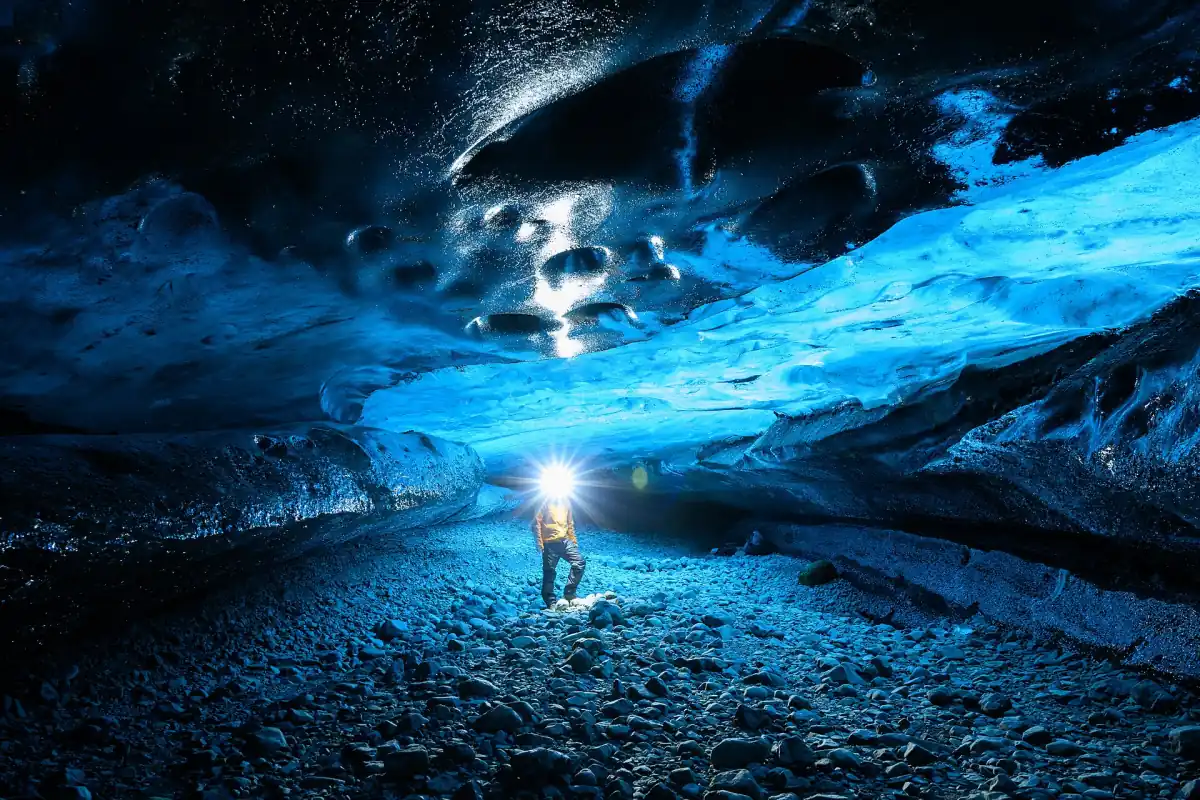
A guided view of glacier ice
Explore with a glacier guide and vehicle transfer, visiting a cave or a blue ice feature according to safety conditions.
Why the ice looks blue
The national park explains the blue colour through the way ice interacts with light: red and yellow light are absorbed and blue light is reflected. Ice containing many air bubbles appears whiter. These differences help explain why the same broad glacier landscape can contain contrasting appearances instead of one uniform shade of blue.
Use that explanation when looking at photographs, without expecting the next cave to reproduce a particular image. Shape and colour change, and an illustration records a view rather than promising the cave on your departure. The Crystal cave guide for Jökulsárlón treats the familiar name as a description of the experience, not a fixed attraction with an unchanging interior.
Blue ice cave facts and history
The story of Breiðamerkurjökull includes both advance and retreat. In the park's historical account, cooling from the thirteenth century contributed to an advance that continued into the eighteenth and nineteenth centuries. At its closest point the glacier left only about 250 metres to the sea. This is historical landscape context, not the distance from a present-day tour meeting point.
Retreat began in the early twentieth century, and lakes formed in the 1930s. These stages explain why the glacier and lagoon should be understood together when looking at the region's past. They do not provide one foundation date for every lake or a date of formation for the particular cave your guide may visit.
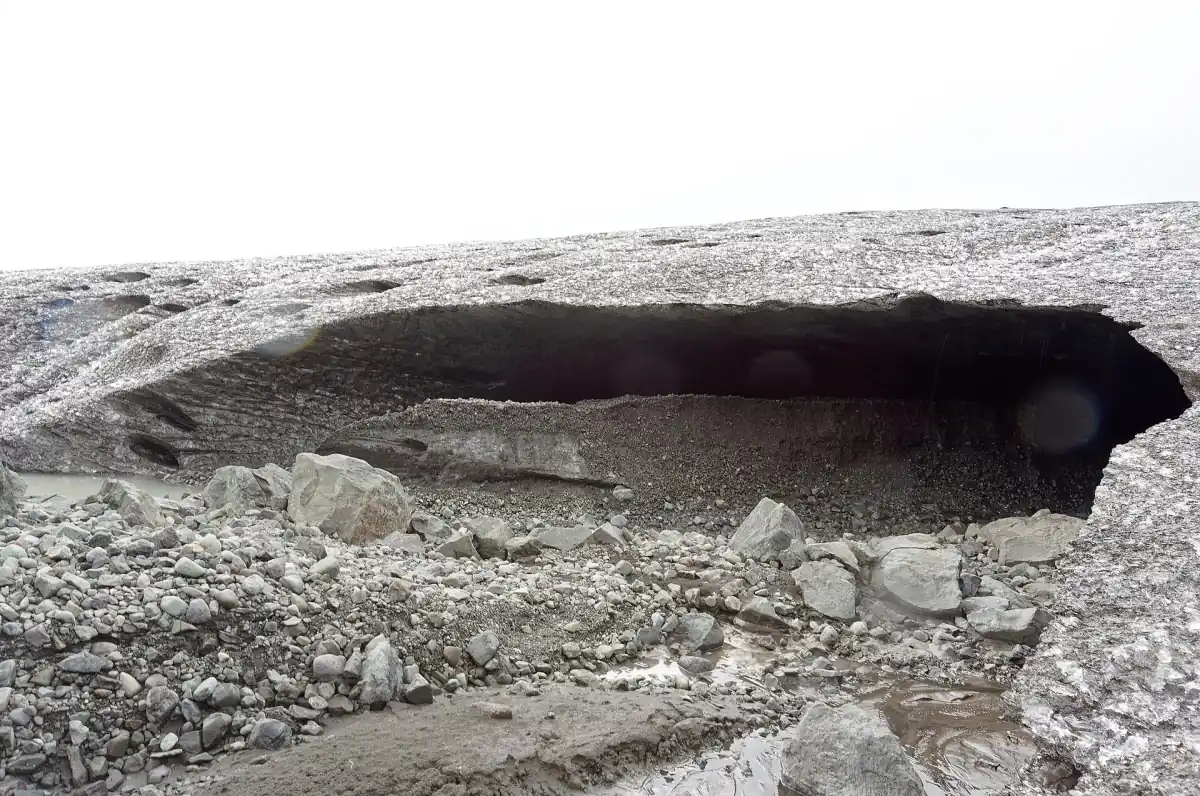
Settlement traditions and a changing lagoon
The park relates early settlement on Breiðamerkursandur through Landnáma and Íslendingabók. These are literary traditions, and place names also preserve the memory of early farms. Read this as the human history attached to a landscape that later changed, rather than as an archaeological date for a cave. Today's guided ice visit and the settlement narrative concern very different timescales.
Modern retreat involves both surface mass loss in a warmer climate and ice calving into Jökulsárlón. For the lagoon itself, its visitor setting and water activities, continue to the Jökulsárlón glacier lagoon guide. Here the lagoon helps explain the glacier's development; a cave tour should be chosen for its own stated route and inclusions.
Volcanoes beneath Vatnajökull
Vatnajökull covers volcanic systems including Grímsvötn, Bárðarbunga, Kverkfjöll and Öræfajökull. Subglacial volcanism and geothermal heat can influence lakes and glacier outburst floods. That wider relationship between fire and ice should not be used to assign a volcanic origin to every blue cave visited on a tour. It also does not predict an eruption or a flood during your visit.
For a broader account of the ice cap and volcanic landscape, see Vatnajökull and the national park. To choose a visit, return to the cave tour comparison. The guided outing on this page includes a glacier guide, a modified vehicle and safety equipment; the safe destination is a cave or a blue ice feature. It offers a way to see the changing ice, without promising a specialised history lecture or a particular cave interior.
Glacier questions
Why can glacier ice look white as well as blue?
The park's explanation links blue colour to light absorption and reflection; many air bubbles give ice a whiter appearance.
Will the same cave exist next winter?
Glaciers and caves change. Operators search for new caves, so an older picture does not promise the same route.
Does this outing guarantee entry into a cave?
The selected product visits a cave or a blue ice feature depending on safety conditions.